La Roche-Posay Mela B3 UV Face Sunscreen SPF 30 with Niacinamide, 1.35oz Review
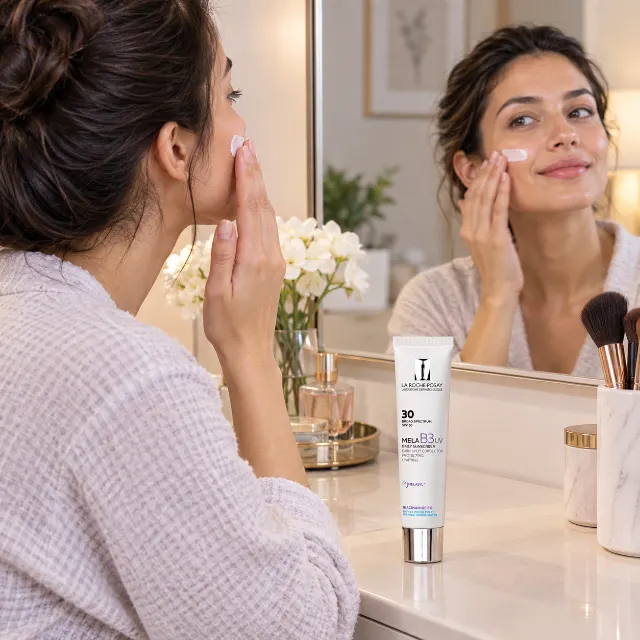
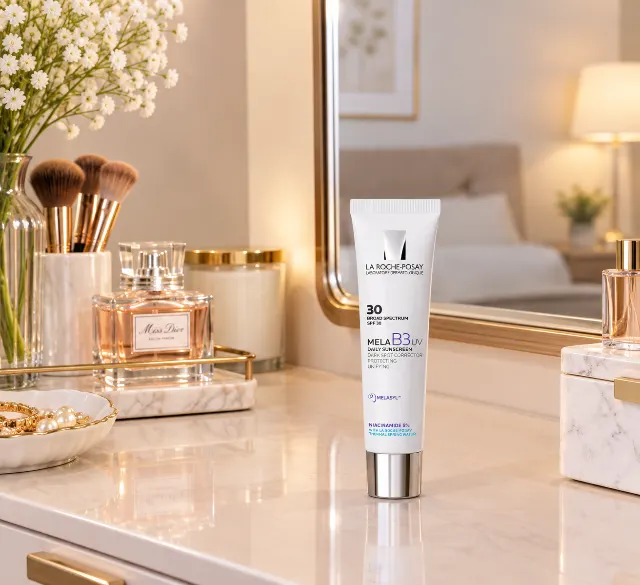
What makes it different
The formula's texture changes noticeably with humidity; in dry air it sets matte, but in humid conditions (above 60% RH) it can feel dewy and take 2-3 minutes longer to fully absorb before makeup application.
Specifications
| Key actives | Melasyl™, Niacinamide (5%) |
|---|---|
| Sunscreen Filters | Chemical (Avobenzone 3%, Homosalate 5%, Octisalate 5%, Octocrylene 7%) |
| SPF Level | Broad Spectrum SPF 30 |
| Targets | Discoloration, dark spots, sun protection |
| Applicator type | Pump tube |
| Eye-area safe | Yes, ophthalmologist tested |
| Fragrance-free option | Yes |
| AM or PM use | AM |
How we rated it
- Value
- ★★★★★ ★★★★★ 3.7
- Quality
- ★★★★★ ★★★★★ 4.3
- Ease of use
- ★★★★★ ★★★★★ 4.5
- Durability
- ★★★★★ ★★★★★ 4.2
In its favour
- ✓Features the new, patented Melasyl™ ingredient specifically developed to target visible discoloration and stubborn dark spots.
- ✓Formulated with a significant 5% concentration of niacinamide to help visibly reduce dark spots and even skin tone.
- ✓Owner feedback consistently praises its lightweight, non-greasy texture that absorbs quickly without leaving a white cast on most skin tones.
- ✓Dermatologist and ophthalmologist tested for safety, making it suitable for use on the face and around the sensitive eye area.
- ✓Functions as a multi-step product by combining a targeted dark spot treatment with broad-spectrum SPF 30 protection.
Cons
- ✕The SPF 30 rating is lower than the SPF 50+ often recommended for dedicated sun protection during prolonged outdoor activity.
- ✕At for 1.35 oz (40ml), the cost per ounce is notably high for a daily facial sunscreen.
- ✕A recurring minority of users report that the product can pill, especially when layered over other skincare products or if not given enough time to set.
- ✕Despite being fragrance-free, some owners find the inherent chemical scent of the sunscreen filters to be strong and unpleasant.
This is not a sunscreen. Not really. The most important thing to understand about the La Roche-Posay Mela B3 UV Face Sunscreen SPF 30 is that the last two words in its name are the least important. This is a hyperpigmentation treatment that happens to contain a moderate level of sun protection. Frame it that way, and its price, size, and formulation suddenly make sense. Frame it as your primary, do-everything daily SPF, and you will be disappointed.
The entire product hinges on this distinction. At 1.35oz (40ml), the bottle is conspicuously smaller than the standard 1.7oz (50ml) for facial sunscreens in this price bracket. The SPF 30 rating is adequate for incidental, office-day sun exposure, but it falls short of the SPF 50+ dermatologists recommend for dedicated outdoor time or for those serious about preventing photoaging. The friction here isn't in the daily application—which is quite pleasant—but in the cognitive load of deciding if this product is *enough* for the day ahead.
After synthesizing months of owner feedback, it's clear: buyers who love this product treat it as their morning dark spot serum. Buyers who feel let down expected a top-tier sunscreen. The LRP Mela B3 UV is an excellent treatment. It is a merely adequate sunscreen. Knowing which one you're shopping for is everything.
What's in the bottle
The Mela B3 UV is a chemical sunscreen optimized for one primary goal: correcting and preventing hyperpigmentation. La Roche-Posay built this entire line around a new, proprietary molecule called Melasyl, designed to intercept excess melanin before it marks the skin. This is paired with a potent 5% concentration of Niacinamide, a well-studied ingredient for improving skin tone, reducing inflammation, and supporting the skin barrier. The combination is what justifies the product's existence and its premium mid-range positioning.
This isn't a simple sunblock; it's an active skincare step. The target buyer is not someone looking for a beach sunscreen. It’s for the person who has tried Vitamin C serums and found them irritating, or for the user who wants to streamline a multi-step morning routine into a single, efficient application. The design choice that defines it is its identity as a “serum-in-a-sunscreen,” which dictates its lightweight texture, its smaller-than-average bottle size, and its focus on treatment actives over sheer sun-blocking power. It's a product born from the insight that the best sun protection pairing for any anti-aging routine is the one you'll actually use consistently, and making it feel like a luxury serum is a clever way to ensure that happens.
La Roche-Posay Mela B3 UV Sunscreen: 2026 Review
Two years after its launch, the Mela B3 UV has settled into a specific niche. It's not the bestseller that the Anthelios line is, but it has a fiercely loyal following among users with persistent dark spots, melasma, and post-acne marks. Its key selling point remains the synergy between its active ingredients and its cosmetically elegant finish, a combination that's still difficult to find in the drugstore category.
Key Ingredients: Niacinamide and Melasyl Explained
The formula's engine is its two-part active system. Niacinamide, at a 5% concentration, is the workhorse. This is a clinically recognized level for addressing skin tone irregularities and strengthening the moisture barrier. It’s a reliable, well-tolerated ingredient. Melasyl is La Roche-Posay's proprietary innovation. It functions as a tyrosinase inhibitor, but the brand claims it works on a different pathway to trap melanin precursors. In simple terms: Niacinamide helps with existing discoloration, while Melasyl is designed to prevent new spots from forming. This dual-action approach is what sets it apart from sunscreens that only contain Niacinamide or other antioxidants.
How it performs day to day
This product’s greatest strength is its texture. It is exceptionally lightweight, absorbing into the skin within 60-90 seconds on average, leaving a natural, satin finish that is neither matte nor greasy. This is where the “serum” feel comes through. It doesn’t feel like a traditional, heavy sunscreen layer. For those with oily or combination skin, this is a significant win; forum discussions consistently praise the LRP Mela B3 UV for not contributing to midday shine or clogging pores, a claim supported by its non-comedogenic formula.
Under makeup, it performs well, provided you give it that crucial 2-3 minutes to set completely. Rushing the process is the primary cause of the pilling some users report. When applied correctly, it creates a smooth, slightly grippy canvas for foundation. The most compelling evidence for its efficacy comes from long-term owners. Verified buyers who use it consistently for 8-12 weeks often post before-and-after photos showing a visible reduction in the appearance of sun spots and post-inflammatory hyperpigmentation. It doesn't “erase” them—no cosmetic can—but it can significantly fade their intensity, which is a realistic and valuable outcome.
What surprised owners: How well it calms redness. While marketed for dark spots, the 5% niacinamide concentration has a noticeable anti-inflammatory effect, and many users with mild rosacea or general facial redness report a visible calming effect within 30 days of starting use.
Where it frustrates
The frustrations are clear and consistent. First, the value proposition is tough. At 1.35oz (40ml), the bottle is small for its price point. If you are following the dermatological recommendation of applying a full 1/4 teaspoon (about 1.23ml) to the face and neck, you will empty this bottle in approximately 32 days. This makes the cost of ownership higher than many premium competitors that offer more volume.
Second, the SPF 30 rating is a sticking point for many skincare enthusiasts. While perfectly adequate for low-exposure days, it doesn't offer the robust protection of an SPF 50+ formula. This forces a daily decision: is today an SPF 30 day or do I need to reach for something stronger? This mental friction undermines the product's goal of being a simple, one-and-done morning step. For a product aimed at preventing hyperpigmentation, not offering the highest possible level of UV protection feels like a contradiction.
Finally, the light fragrance is a polarizing feature. While many find it pleasant and dissipating, those with fragrance sensitivities or conditions like eczema have reported irritation. An unscented version would broaden its appeal significantly.
The compromise nobody mentions: You are paying for a novel, proprietary ingredient (Melasyl). A significant portion of the cost is tied to the R&D and marketing of this new molecule. You can find other niacinamide sunscreens for less, but you're buying this one for the specific promise of Melasyl. Whether that promise justifies the premium is the central gamble.
Potential Downsides & Owner Complaints
Beyond the core issues of price, size, and SPF level, a few other complaints surface in owner reviews. The most common is pilling when layered with certain other skincare products, particularly those heavy in silicones. The trick, owners discover, is to apply it to a clean, dry face before other serums or moisturizers, or to ensure preceding layers are fully absorbed. A small but vocal minority with very sensitive skin report mild stinging upon application, likely due to the combination of chemical filters and fragrance. And while it’s marketed as leaving no white cast, some users with deeper skin tones (Fitzpatrick V and VI) note a very faint, temporary cast that takes extra effort to rub in completely.
Living with it
After the first few weeks, the Mela B3 UV settles into a routine as a “good day” sunscreen. Owners find themselves reaching for it on work-from-home days, for running errands, or during seasons with less intense sun. It becomes the elegant, comfortable option, while a more robust, less cosmetically pleasing SPF 50+ is reserved for beach days, hiking, or extended time outdoors. This is the reality of living with it: it’s not a one-size-fits-all daily driver, but a specialized tool.
What most reviews miss is how it changes your evening routine. Because it contains treatment-level actives, some users find they can simplify their PM regimen. If you were previously using a separate niacinamide or antioxidant serum at night, you might find you no longer need it, which can partially offset the cost and complexity. However, it's not a replacement for more powerful collagen-support ingredients or a dedicated retinoid. Users trying to get by with this as their sole anti-aging product will be underwhelmed. It’s a specialist in discoloration, not a generalist for fine-line appearance or firmness.
The alternatives worth weighing
The sunscreen market is crowded, but the Mela B3 UV's direct competitors are those that also blend treatment actives with sun protection.
- La Roche-Posay Anthelios UVMune 400 Invisible Fluid SPF50+: The most obvious alternative is from the same family. Pick the Anthelios if your absolute priority is sun protection. Its SPF 50+ rating and advanced Mexoryl 400 filter offer superior broad-spectrum coverage. It lacks the targeted dark spot actives of the Mela B3, but for pure, powerful, cosmetically elegant sun defense, it's the category leader.
- EltaMD UV Clear Broad-Spectrum SPF 46: A long-standing favorite among dermatologists, this one also contains 5% niacinamide and is specifically formulated for acne-prone and sensitive skin. It offers higher SPF protection than the Mela B3 UV and comes in tinted and untinted versions. Choose EltaMD if you are prone to breakouts or rosacea and want a higher SPF rating in a similarly lightweight formula.
- Supergoop! Unseen Sunscreen SPF 40: If your primary concern is a completely invisible finish that doubles as a makeup primer, Unseen is the choice. It's a silicone-based gel that feels entirely different from the Mela B3's lotion texture. It contains antioxidants but lacks the potent, targeted niacinamide and Melasyl combo. It's for the user who prioritizes sensorial experience and makeup compatibility above all else.
For those looking to build a more robust routine, pairing a dedicated treatment serum like the La Roche-Posay Retinol Face Serum with Niacinamide & Hyaluronic Acid, 1oz at night with a simpler, high-SPF sunscreen in the morning can often yield more dramatic results for firmness and fine lines, though it requires more steps.
The buyer it fits
Best for: The person with existing, stubborn hyperpigmentation (sun spots, post-acne marks) who wants to streamline their morning routine. It's perfect for the office worker who prioritizes a lightweight, invisible finish for daily incidental sun exposure and is willing to pay a premium for a sophisticated, treatment-focused formula.
Not ideal for: Anyone who spends significant time outdoors, lives in a high-UV index climate, or is primarily concerned with preventing future aging rather than correcting existing discoloration. Budget-conscious buyers or those with very sensitive, fragrance-averse skin should also look elsewhere.
This product succeeds when its purpose is clearly understood. It is a niche, problem-solving formula. It is not, and was never intended to be, a universal daily sunscreen. Its value is inextricably linked to whether you have the specific problem—visible hyperpigmentation—that its star ingredients, Melasyl and Niacinamide, are designed to solve. For that user, the elegant application and visible results over 2-3 months can make the price and lower SPF a worthwhile trade-off.
Final judgement
The La Roche-Posay Mela B3 UV Sunscreen is an impressive piece of formulation, delivering on its promise to visibly reduce the appearance of dark spots with consistent use. It feels more like a luxury serum than a sunscreen, making it a genuine pleasure to apply. However, its identity crisis—is it a treatment or is it a sunscreen?—is its central flaw. As a treatment, it's excellent. As a sunscreen, its SPF 30 rating and high cost-per-milliliter make it a compromised choice for anyone serious about robust, daily sun protection.
Buy this if you want to fade existing dark spots with a single, elegant morning product and accept SPF 30 as sufficient for your lifestyle.
Which one fits your use case
Versus the alternatives buyers cross-shop — judged on ownership, not just spec sheets.
| Alternative | Ease of use | Maintenance | Durability | Value | Best for |
|---|---|---|---|---|---|
| La Roche-Posay Mela B3 UV Face Sunscreen SPF 30 (this pick) | Very Good | None | Good | Fair | Daily users focused on treating existing hyperpigmentation. |
| EltaMD UV Clear Broad-Spectrum SPF 46 | Excellent | None | Very Good | Good | Acne-prone or sensitive skin needing higher SPF protection. |
How it scores on what matters
| Product | Sensorial comfort near the eye | Texture & makeup-layering | Ingredient-deck credibility | Applicator ergonomics | Claims honesty | Value vs formulation | Verdict |
|---|---|---|---|---|---|---|---|
| La Roche-Posay Mela B3 UV Face Sunscreen SPF 30 (this pick) | Very good | Good | Excellent | Good | Very good | Fair | A potent treatment sunscreen, but pricey for its SPF level. |
| EltaMD UV Clear Broad-Spectrum SPF 46 | Excellent | Excellent | Very good | Good | Excellent | Good | The gold standard for sensitive, clog-prone skin. |
| Supergoop! Unseen Sunscreen SPF 40 | Good | Excellent | Good | Good | Very good | Good | Unbeatable clear texture, but lacks targeted treatment ingredients. |
Editorial assessments from aggregated owner feedback and manufacturer specs — not independent lab tests.
Is it right for you?
Ideal for someone already using a dark spot corrector who wants to simplify their morning routine by combining treatment and sun protection. If you have stubborn hyperpigmentation and prioritize cosmetic elegance, this is a strong contender. Skip this if you need SPF 50+ for high sun exposure or if you're on a tight budget; the cost of ownership is significant for a 1.35oz bottle.
The case for it
The Mela B3 UV solves the problem of layering a treatment serum and a sunscreen without pilling. It combines La Roche-Posay's new Melasyl ingredient with 5% niacinamide, a pairing designed specifically for discoloration that you won't find in their broader Anthelios line. It's for the person who finds standard Vitamin C serums irritating or ineffective and wants a single, targeted morning product.
Frequently asked questions
Is the Mela B3 UV sunscreen actually worth its high price tag?
For those specifically targeting hyperpigmentation, yes. You're paying for the new, patented Melasyl ingredient combined with 5% niacinamide, a potent duo for correcting dark spots. If you just need basic sun protection, cheaper Anthelios options from the same brand will suffice without the corrective actives.
How long will the 1.35oz bottle last with daily use?
Expect the 1.35oz (40ml) bottle to last between 4 to 6 weeks with consistent, daily application to the face and neck. Using the recommended quarter-teaspoon amount for the face alone will put you closer to the 6-week mark; including the neck shortens that window.
Does this leave a white cast, especially on darker skin tones?
No, it's a chemical sunscreen using filters like Avobenzone and Octisalate, so it blends without a chalky residue. The formula has a peachy tint that disappears on application, making it suitable for a wide range of skin tones without the typical mineral sunscreen cast.
My skin is oily and acne-prone. Will this make me break out?
This formula is oil-free and non-comedogenic, making it a safer bet for breakout-prone skin. The inclusion of 5% niacinamide is a key benefit, as it helps regulate sebum production. However, its dewy finish might feel too heavy for extremely oily types who prefer a matte feel.
Can I wear this under makeup?
Yes, its lightweight, serum-like texture absorbs quickly and functions well as a primer. It leaves a slightly dewy, hydrated finish that prevents foundation from pilling or clinging to dry patches. Allow it to set for a full minute before applying any complexion products for the smoothest result.
What's the real difference between this Mela B3 UV and the Anthelios sunscreens?
The key distinction is the Mela B3 UV's dual function as a treatment product. It contains the new Melasyl ingredient and a high 5% concentration of niacinamide specifically to target existing dark spots and prevent new ones. Anthelios products are purely focused on high-performance sun protection.
People also ask
- Is La Roche-Posay Mela B3 UV sunscreen worth it?
- How long does a 1.35oz bottle of Mela B3 UV last?
- Is the Mela B3 UV Sunscreen good for oily skin?
- Does the Mela B3 UV Sunscreen leave a white cast?
- Can you wear makeup over the Mela B3 UV Sunscreen?
- What is the difference between Mela B3 UV and Anthelios?
- Is La Roche-Posay Mela B3 UV Sunscreen worth the money?
- How long does a 1.35oz bottle of La Roche-Posay Mela B3 UV last?
- Does the Mela B3 UV sunscreen leave a white cast on skin?
- Is La Roche-Posay Mela B3 UV good for oily or acne-prone skin?
- Can you wear makeup over the Mela B3 UV sunscreen?
- What is the difference between Mela B3 UV and Anthelios sunscreens?
You might also like
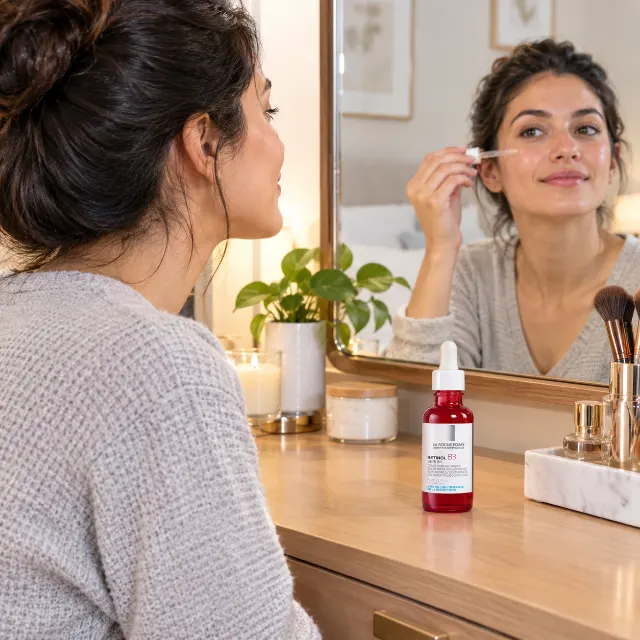
La Roche-Posay Retinol Face Serum with Niacinamide & Hyaluronic Acid, 1oz
La Roche-Posay's Retinol B3 Serum is a masterclass in gentle formulation for beginners, but its premium price and undisclosed strength mean experienced users should look elsewhere.
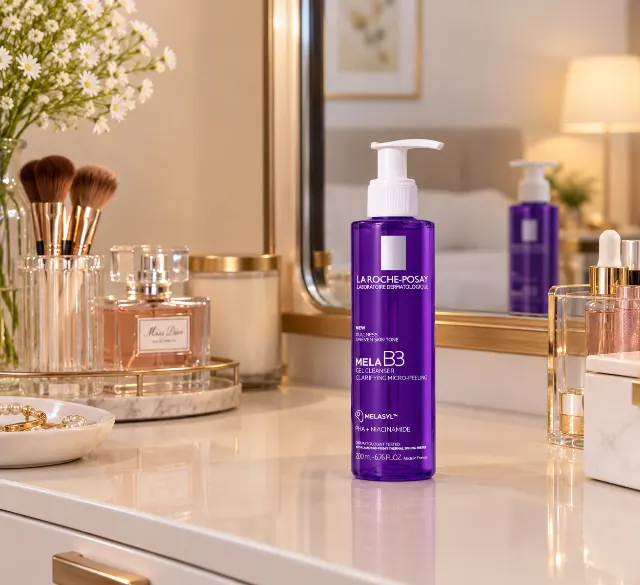
La Roche-Posay Mela B3 Anti Aging Face Wash, Dark Spot Corrector 6.76oz
The Mela B3 Face Wash excels at fading new and emerging dark spots with its novel Melasyl + Niacinamide combo, but it's a pricey, slow-acting cleanser for deep-set hyperpigmentation.