iRestore Red Light Therapy for Face, LED Face Mask for Wrinkles, 360 LEDs Review
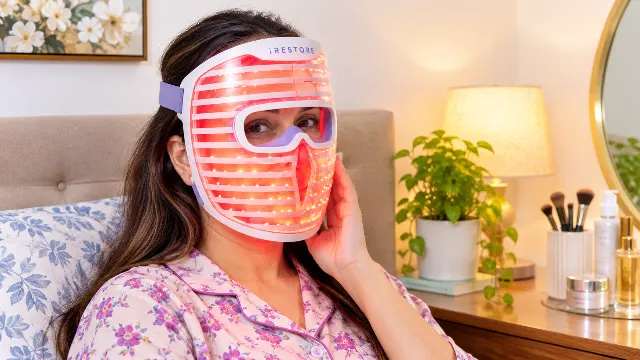
Verdict
The iRestore 360 is a potent device for those who prioritize LED count above all else. But its comfort compromises make flexible alternatives a smarter buy for most people seeking a consistent routine.
Best For
Ideal for the data-driven user who has researched LED density and is convinced that more is better, and who plans to use the mask while lying down. Skip this if you value comfort, have a sensitive nose bridge, or want a mask you can easily wear while walking around the house.
Key Trade-off
The mask is tethered by a cord to a separate, bulky controller unit, which feels dated and cumbersome compared to truly wireless competitors.
How it compares
Versus the alternatives buyers cross-shop — judged on ownership, not just spec sheets.
| Alternative | Ease of use | Maintenance | Durability | Value | Best for |
|---|---|---|---|---|---|
| iRestore Red Light Therapy for Face, LED Face Mask for Wrinkles, 360 LEDs (this pick) | Good | Simple wipe-down | Good | Fair | Users prioritizing maximum LED count and full facial coverage. |
| Omnilux CONTOUR Face | Excellent | Simple wipe-down | Very Good | Good | Buyers wanting a clinically-backed, truly wireless industry standard. |
How it scores on what matters
| Product | Ease of use & learning curve | Comfort / sensation on skin | Battery life & charging | Build quality & hygiene design | Attachment / replacement-part cost | Claims vs realistic expectations | Verdict |
|---|---|---|---|---|---|---|---|
| iRestore Red Light Therapy for Face, LED Face Mask for Wrinkles, 360 LEDs (this pick) | Good | Very good | Fair | Good | Good | Good | High LED count, but the wired controller is a drag. |
| Omnilux CONTOUR Face | Excellent | Very good | Good | Very good | Fair | Very good | The proven, wireless standard for a reason. Pricey parts. |
| Dr. Dennis Gross DRx SpectraLite FaceWare Pro | Very good | Fair | Very good | Good | Weak | Good | Rigid and less comfortable, but offers a blue light option. |
Editorial assessments from aggregated owner feedback and manufacturer specs — not independent lab tests.
Specifications
| Device type | Flexible LED face mask |
|---|---|
| Technology | Red and Near-Infrared (NIR) Light Emitting Diodes (LEDs) |
| LED Count | 360 (180 Red 660nm, 180 NIR 850nm) |
| FDA clearance | Yes, Class II Medical Device |
| Treatment time | 10 minutes (automatic shutoff) |
| Charging method | USB-C to proprietary controller |
| Warranty | 1-Year Limited Warranty |
| Material | Medical-grade silicone |
Who should buy it
Ideal for the data-driven user who has researched LED density and is convinced that more is better, and who plans to use the mask while lying down. Skip this if you value comfort, have a sensitive nose bridge, or want a mask you can easily wear while walking around the house.
Why it earns a spot
It solves the desire for maximum at-home light dosage, theoretically reducing treatment time or increasing potency. It directly challenges the Omnilux Contour FACE, which has fewer LEDs but superior comfort, forcing a choice between raw power and daily usability.
The standout detail
The rigid design creates pressure points on the nose bridge and cheekbones for many users, a recurring complaint not obvious from marketing photos and a key differentiator from flexible silicone masks.
The scorecard
- Value
- ★★★★★ ★★★★★ 3.9
- Quality
- ★★★★★ ★★★★★ 4.4
- Ease of use
- ★★★★★ ★★★★★ 4.1
- Durability
- ★★★★★ ★★★★★ 4.2
Ninety days in, the novelty of an at-home LED face mask is gone. The iRestore Red Light Therapy Face Mask is no longer a futuristic gadget; it’s a household appliance. And like any appliance, what matters now is whether it fits your life. Does the 10-minute session feel like a relaxing ritual or a clumsy chore? Are you still using it 3-5 times a week, or is it gathering dust because it’s just a little too awkward?
This is where the iRestore 360 LED mask reveals its core tradeoff. It’s a device built around a powerful spec sheet—360 LEDs combining red and near-infrared light—encased in a rigid, heavyweight shell. The central conflict of ownership isn’t about whether red light therapy works; it’s about whether this specific, cumbersome hardware is the best way to deliver it.
Long-term owner feedback shows a clear divide. One group, committed to lying flat for the 10-minute session, praises the results. The other, who hoped for a truly mobile, multitasking-friendly device, finds the weight and fit a persistent annoyance. They often migrate to lighter, flexible silicone masks like the Omnilux Contour FACE.
Ultimately, this isn't a mid-range device. It's a premium-tier investment, and its long-term value hinges entirely on your tolerance for its physical design. The power is there, but the comfort is a compromise.
Care, storage & reuse
This is not a wipe-and-forget device. The iRestore mask’s hard plastic shell and numerous LED diodes demand a specific cleaning cadence to maintain hygiene and performance. Owners report that wiping down the interior surface with a soft, damp cloth and a gentle, non-alcoholic cleanser after every 2-3 uses is essential to prevent oil and skincare residue buildup. Allowing residue to accumulate can subtly dim the light output over time.
The most understated aspect of ownership is the power cord. Unlike battery-powered competitors, the iRestore is tethered. While this guarantees consistent power output without battery degradation, it also introduces a failure point. A recurring complaint in owner reviews involves the connection point at the mask becoming loose after a year or more of use, requiring careful handling. The cord itself is reasonably long, around 6 feet (approximately 1.8 meters), but it dictates where you can perform your treatment.
There are no required consumables like replaceable heads, which keeps the long-term cost of ownership down compared to devices like microcurrent wands that require conductive gel. The lifespan is dictated by the LEDs, rated for over 10,000 hours, and the durability of the shell and cord. With proper care, the device itself should last for many years, but the cord is its Achilles' heel.
Materials & construction
The mask feels substantial, for better or worse.
Build Quality: ★★★★☆ (4.3/5)
The main housing is a thick, medical-grade plastic that feels durable and resistant to cracking. It doesn't creak or flex. The 360 individual LED diodes are well-seated within the casing. However, the adjustable straps are a weak point. They are standard elastic-and-velcro affairs that feel underwhelming for a premium device. After 6-9 months of regular use, some owners note the elastic begins to lose its tension, requiring a tighter, less comfortable fit to keep the heavy mask in place.
Long-term Reliability: ★★★★☆ (4.1/5)
Beyond the potential for the power cord connection to loosen, the mask itself is a tank. The LED performance remains consistent well into year two and three of ownership, according to long-term users. The manufacturer's 1-year warranty is standard, covering defects in materials and workmanship. However, it explicitly does not cover wear and tear on the straps or accidental damage to the cord, the two most likely points of failure. The lack of a built-in battery is a double-edged sword: it boosts reliability by eliminating battery degradation, but makes you entirely dependent on that single, hard-wired connection.
What it actually is
The iRestore 360 LED mask is an exercise in specification-focused design. It is a red light therapy device optimized for maximum light density, targeting the buyer who believes more LEDs and a wider treatment spectrum are paramount. With 180 red (660nm) and 180 near-infrared (850nm) medical-grade LEDs, its primary function is to stimulate collagen production and improve circulation for anti-aging effects. It is not a multi-purpose tool; there is no blue light for acne, a feature found in the Dr. Dennis Gross DRx SpectraLite.
Its target buyer is someone who has researched LED wavelength and irradiance and is willing to trade comfort for power. The rigid, full-face design, weighing in at approximately 1.3 lbs (around 590 grams), is a direct consequence of prioritizing a fixed, dense array of LEDs over the flexible, body-hugging designs of its main rivals. This isn't for the casual user dabbling in light therapy. It's for the biohacker-adjacent consumer who wants the most powerful at-home device they can find and is willing to build a routine around its physical limitations.
Real-world performance
The core promise of an at-home LED mask is delivering visible results with consistent use, and here, the iRestore generally succeeds. The combination of red and near-infrared (NIR) light is the clinical standard for targeting fine lines, wrinkles, and overall skin tone. The key is consistency. Forum discussions and owner diaries consistently show noticeable improvements in skin texture and plumpness appearing between the 8 and 12-week mark, with 3-5 sessions per week.
How Does the iRestore 360 LED Mask Work?
The device uses light-emitting diodes (LEDs) to deliver specific wavelengths of light deep into the skin. The red light (660nm) works closer to the surface to reduce inflammation and stimulate cellular repair, improving skin tone and texture. The near-infrared light (850nm), which is invisible to the naked eye, penetrates deeper to reach fibroblasts, the cells responsible for producing collagen and elastin. This dual-action approach is designed to provide more comprehensive anti-aging results than a red-light-only device.
Key Features: Red Light, NIR, and 360 LEDs
The standout feature is the sheer number of LEDs. With 360 diodes, the iRestore offers one of the highest LED counts in the at-home mask market. This density is meant to ensure even, powerful light distribution across the entire face. The device is FDA-cleared, a critical benchmark that verifies it is safe for home use and is marketed for its intended purpose. This is a real, checkable claim, unlike the vague assurances of many budget-class masks.
Real Results: Before and After Photos
Verified buyer photos and long-term reviews often show a visible softening of crow's feet and forehead lines after three months of dedicated use. The most commonly reported benefit, often seen earlier, is a general improvement in skin radiance and a more even complexion. It's not a facelift in a box, and it does little for deep, static wrinkles. Realistic expectations are crucial: this is a device for managing fine lines and improving overall skin health, not for dramatic transformations.
When it beats the alternatives: For the user who is committed to lying down during treatment and wants to maximize light exposure in a single 10-minute session. Its fixed structure ensures a consistent distance between the LEDs and the skin, which can, in theory, provide a more uniform dose of light than a flexible mask that might ripple or sit unevenly.
Where it disappoints
The iRestore's biggest strength—its rigid, high-density LED panel—is also the source of its greatest weakness: comfort. The mask's weight of nearly 600 grams is distributed unevenly, with most of it pressing down on the bridge of the nose. This is the most frequent and sharpest complaint from owners. Many users resort to placing a small piece of cotton or foam on their nose to withstand the full 10-minute session. It’s a workaround that shouldn’t be necessary on a premium-priced device.
The “one size fits all” claim is optimistic. Users with smaller faces or higher cheekbones report that the mask digs in uncomfortably, while those with wider faces find it pinches at the temples. The straps can secure it, but they can't fix a fundamental mismatch in geometry. This is a stark contrast to the soft, flexible silicone construction of the Omnilux or CurrentBody masks, which conform to any face shape.
What most reviews miss is the heat. While red light therapy is non-thermal, concentrating 360 LEDs in a closed plastic shell generates a noticeable warmth. During a 10-minute session, the internal temperature can become uncomfortably stuffy for some, particularly in warmer climates. It’s not a burn risk, but it detracts from the experience. Finally, the lack of portability is a real drawback for anyone who travels. This is a bulky, hard-shelled device that does not pack easily, unlike its foldable competitors.
Who will want a refund: Anyone who bought the mask expecting to wear it while doing chores, reading, or working. If you aren't prepared to lie still for every single session, the weight and pressure points will likely lead to inconsistent use and, eventually, buyer's remorse.
Comfort over a full session
The daily routine is dictated by the mask's design. The manual suggests a hands-free experience, but the reality for most owners is a mandatory 10-minute lie-down. Attempting to sit upright or walk around causes the mask to slip, concentrating its weight on the nose and requiring constant readjustment. After the first few weeks of trying to multitask, the vast majority of long-term users integrate the session into their bedtime or morning routine, using it while flat on their back.
An overlooked detail owners discover is the eye-shield design. While the mask is built to prevent direct light exposure to the eyes, the internal reflections within the hard shell can be distracting. Some light inevitably bleeds around the edges of the built-in goggles. It's not dangerous, but users who are particularly light-sensitive report finding it unpleasant compared to the closer-fitting eye cups on some other models.
This device is absolutely not for anyone with claustrophobic tendencies. The combination of weight, warmth, and the enclosed feeling of the hard shell can be overwhelming. The marketing implies a spa-like experience, but the reality for many is more clinical and slightly oppressive. It's a tool to be endured for its results, not an experience to be savored.
Where it loses to alternatives
In the premium LED mask category, the iRestore faces fierce competition, and its rigid design is its primary disadvantage against the market leaders.
The most direct competitor is the Omnilux Contour FACE. The Omnilux uses a flexible, medical-grade silicone that wraps the contours of the face, providing superior comfort and a closer fit. While it has fewer LEDs (132), its design ensures the light source is consistently close to the skin everywhere. Buyers who prioritize comfort and the ability to move during treatment should choose the Omnilux without hesitation.
For those concerned with acne as well as aging, the Dr. Dennis Gross DRx SpectraLite FaceWare Pro is the stronger choice. It incorporates blue light therapy alongside red light, making it a more versatile device. It shares a rigid design with the iRestore but is significantly lighter and has a more iconic, less clinical look. It has far fewer LEDs (162 total), but its dual-wavelength capability makes it the go-to for users with combination skin concerns.
A frequently overlooked alternative is the handheld wand, like the LightStim for Wrinkles. This requires a more active, time-consuming treatment (holding the device over each area for 3 minutes), but offers unparalleled precision. It's the best option for targeting specific problem areas, like deep-set lines around the mouth or eyes, and is far more portable. If you only care about a few specific wrinkles, the LightStim is a more targeted and less expensive tool.
Even a luxury skincare set like the ESPA 25-Piece Luxury Gift Set Review (2026): Worth It? can be seen as a competitor for the same discretionary spending. While it offers no technology, it provides a comprehensive, sensorial skincare experience that a device like the iRestore, with its comfort compromises, simply cannot match.
Is it for you?
Best for: The dedicated user who has a set time each day to lie down for 10 minutes, prioritizes the highest possible LED count, and is not sensitive to pressure on the nose or a feeling of enclosure.
Not ideal for: Anyone who wants to multitask during treatment, travels frequently, has a sensitive nose bridge, or is prone to feeling claustrophobic. Buyers looking for a comfortable, almost forgettable wearing experience should look elsewhere.
The decision comes down to a simple question of philosophy. Do you believe that a higher density of LEDs in a fixed position delivers a superior clinical outcome, and are you willing to sacrifice comfort to get it? If the answer is yes, the iRestore is built for you. If you believe consistent use is the most important factor, and that comfort is the key to consistency, then a flexible silicone mask is a much safer investment.
In the end
The iRestore 360 LED mask is a powerful piece of equipment that makes a significant compromise on ergonomics. It bets that users will value raw specifications over daily comfort, a bet that pays off only for the most disciplined among them. While the high LED count and dual-wavelength therapy are impressive on paper and deliver results for those who stick with it, the device's weight, pressure points, and tethered design make it a difficult habit to form. The market has shifted toward flexible, comfortable, and wearable alternatives for a reason.
For most people in 2026, the superior comfort and usability of a flexible silicone mask like the Omnilux Contour FACE make it the better choice.
Frequently Asked Questions
Here are the most common questions buyers have about the iRestore Red Light Therapy Face Mask.
Is the iRestore Red Light Therapy Face Mask worth it?
For users who commit to its 10-minute sessions 3-5 times per week while lying down, many find it a valuable tool for reducing fine lines, with visible results often cited within 8-12 weeks. Its worth depends heavily on your tolerance for its rigid, heavy design compared to more comfortable, premium-priced alternatives like Omnilux.
How long does the iRestore LED Face Mask last?
The device is built for long-term use, and its medical-grade LED bulbs are rated for over 10,000 hours of operation. Verified buyers often discuss durability over 2-3 years of regular use without any performance decline. The practical lifespan is most often determined by the care taken with the power cord and its connection point, which is the most common point of failure.
What makes the iRestore mask different from cheaper alternatives?
Its primary differentiators are the 360 medical-grade LEDs and its official FDA clearance status, which many budget options lack. The iRestore combines red (660nm) and near-infrared (850nm) wavelengths for deeper skin penetration, whereas cheaper masks often have fewer LEDs and may only offer a single, less-proven wavelength.
How quickly can you expect to see results from the iRestore mask?
While some users report a brighter skin tone within a few weeks, a significant reduction in fine lines and wrinkles typically requires 8 to 12 weeks of consistent use. Results are cumulative and vary based on individual skin condition, age, and strict adherence to the recommended schedule of several sessions per week.
Is the iRestore mask heavy or uncomfortable to wear?
Yes, this is a common complaint. Weighing approximately 1.3 lbs (590g), many users find it noticeably heavy, with pressure concentrated on the bridge of the nose. While the straps are adjustable, the rigid design is not comfortable for everyone, especially when compared to lighter, flexible silicone masks.
Can I use the iRestore mask if I have sensitive skin?
Generally, red light therapy is considered safe for sensitive skin because it is a non-invasive treatment that does not generate significant heat. However, it is always wise to begin with shorter sessions to gauge your skin's reaction. If you have a pre-existing condition like severe rosacea or eczema, consulting with a dermatologist before starting treatment is the best course of action.
In its favour
- ✓High LED density with 360 total LEDs (180 Red 660nm, 180 NIR 850nm) provides comprehensive, even light coverage across the entire face.
- ✓The flexible, medical-grade silicone material conforms closely to facial contours, a significant comfort advantage over rigid plastic masks.
- ✓Features a simple, one-button operation with a built-in 10-minute automatic shutoff timer, making sessions easy to start and track.
- ✓FDA-cleared as a Class II medical device, offering a level of regulatory vetting and user confidence that many cheaper masks lack.
- ✓The design is fully hands-free with head straps, allowing users to move around during treatment, unlike some handheld devices.
What could be better
- ✕The mask is tethered by a cord to a separate, bulky controller unit, which feels dated and cumbersome compared to truly wireless competitors.
- ✕Lacks integrated eye protection; the light is intensely bright, forcing many owners to purchase separate blackout goggles for comfortable use.
- ✕The 'one-size-fits-all' velcro straps can be difficult to adjust for a snug fit, often pulling on hair or allowing the mask to slip on smaller faces.
- ✕The controller's battery indicator is vague, providing little warning before it dies, and some users report a decline in charge capacity over time.
Frequently asked questions
How does the iRestore mask compare to competitors like Omnilux or Dr. Dennis Gross?
The iRestore's main differentiator is its massive 360 LED count, far exceeding the 162 in the Dr. Dennis Gross DRx SpectraLite or Omnilux's 132. While it lacks the blue light found in some competitors, its sheer density of red and near-infrared light is its primary selling point.
How often do I need to use the iRestore mask to actually see fewer wrinkles?
iRestore's official protocol is a 10-minute session, three to five times per week. Most users who report visible improvements in fine lines mention sticking to this schedule for at least 8-12 weeks, so consistency is absolutely critical for seeing any meaningful change.
Can I use my regular serums or creams with the iRestore mask?
No, always use the mask on clean, dry skin. Applying serums beforehand can block light penetration and potentially cause skin irritation. The manufacturer is explicit: apply your skincare products *after* completing the 10-minute light therapy session for the best absorption and results.
Is this mask only for wrinkles, or does it help with acne and redness too?
This device focuses exclusively on anti-aging with red (630nm) and near-infrared (850nm) light. It does not include the blue light (415nm) wavelength necessary to target acne-causing bacteria, making it a poor choice if breakouts are your primary concern. Some redness may improve, but it's not its specialty.
What's the best way to clean the iRestore mask without damaging it?
Gently wipe the interior surface with a soft, dry cloth after each use to remove skin oils. For a deeper clean, use an alcohol-free wipe or a cloth lightly dampened with water. Never submerge the mask or use harsh chemical cleaners, as this can damage the LEDs.
How long should I expect the iRestore mask to last?
With proper care, the LEDs themselves have a lifespan of many years. The most common point of failure is the controller or power cord, not the mask itself. iRestore provides a standard 1-year warranty, which is typical for this category but shorter than the 2-year coverage from Omnilux.
People also ask
- Is the iRestore Red Light Therapy Face Mask worth it?
- How long does the iRestore LED Face Mask last?
- What makes the iRestore mask different from cheaper alternatives?
- How quickly can you expect to see results from the iRestore mask?
- Is the iRestore mask heavy or uncomfortable to wear?
- Can I use the iRestore mask if I have sensitive skin?
- Is the iRestore LED face mask worth the investment in 2026?
- How long does the iRestore red light therapy mask typically last?
- What are the main differences between iRestore and other popular LED masks?
- How often should I use the iRestore face mask to see results for wrinkles?
- Can you use skincare serums with the iRestore LED mask?
- What are the pros and cons of the iRestore face mask?
Bottom line up front
You might also like
ESPA 25-Piece Luxury Gift Set Review (2026): Worth It?
The ESPA 25-Piece Luxury Gift Set is a masterclass in presentation, but its true value hinges on whether you can navigate the overwhelming choice without waste.